

- Download our Delhi Schools Guide
Living in Delhi as an expat
Expats moving to Delhi often describe their first few months as a whirlwind, and living in Delhi as an expat is an adjustment for almost everyone. The cultural differences can be overwhelming at first, but most new arrivals find their feet sooner than they expect. If you arrive with an open mind, you’re likely to enjoy the city more and stay longer than you planned.
Delhi’s official name is the National Capital Territory of Delhi, and New Delhi, the district that British planners laid out as the seat of government in the early 20th century, is one part of it. The built-up area is far larger than the territory’s borders, though. Gurugram (formerly Gurgaon) in Haryana and Noida in Uttar Pradesh are part of the same urban sprawl, and the wider area is officially the National Capital Region (NCR). Plenty of expats live or work in one of these satellite cities.
Most expats put winter smog at the top of their list of complaints, and the traffic a close second. Summers are fiercely hot, and even seasoned travellers can find the sheer size of the city tiring.
There’s no single dominant culture in Delhi. Residents come from every corner of India and much of the wider world, and Delhiites are used to newcomers, whether they’ve arrived from Chennai or Chicago. Historians count at least seven earlier cities on the same patch of ground, so it’s common to find a centuries-old tomb or a ruined fort at the end of an ordinary residential street.
Local Culture in Delhi
Pros and Cons of Moving to Delhi
Working in Delhi
Employers bring most expats working in Delhi over on an intra-company transfer, and the remainder tend to arrive with a job offer already in hand. The Indian government sets a minimum salary for employment visa holders, so foreign hires are mostly in senior or specialist roles. You’ll need an employment visa before you travel, and your employer will supply most of the supporting paperwork. Employment visa holders usually have to register with the Foreigners Regional Registration Office (FRRO) soon after they arrive, and the process is online.
Delhi is India’s capital, so the public sector is enormous. The city’s embassies, international agencies, NGOs, and think tanks employ a large share of its foreign residents.
Much of the region’s corporate work is across the city limits in Gurugram, where many multinationals have their Indian headquarters, and in Noida, which is a major base for IT and outsourcing firms. Consulting, finance, IT services, and e-commerce all have a big presence in the NCR.
Work culture in Delhi is hierarchical, and expats who invest time in personal relationships with colleagues and clients tend to get things done faster. Two of India’s biggest industry bodies, the Confederation of Indian Industry (CII) and the Federation of Indian Chambers of Commerce and Industry (FICCI), have their headquarters in New Delhi. Their events are a reliable way into the city’s business circles, and the capital’s two big convention centres, Bharat Mandapam and Yashobhoomi, are the venues for many of the country’s largest trade fairs.
Finding a Job in Delhi
Visas and Residence Permits for India
Lifestyle in Delhi
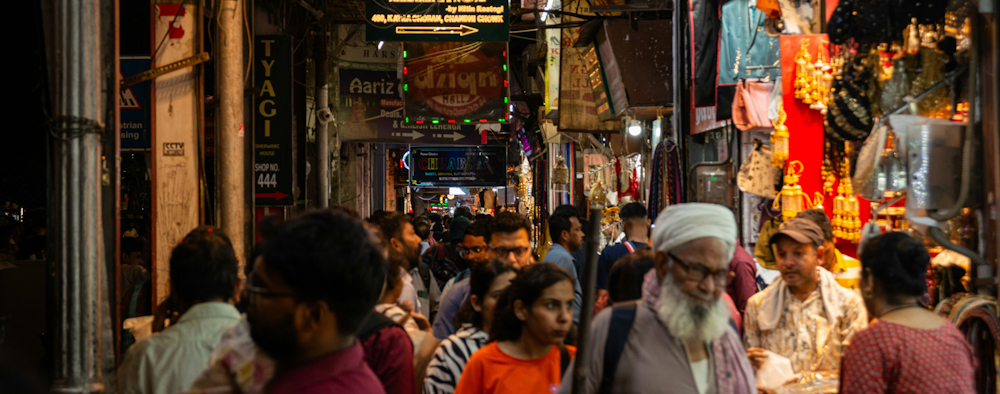
If you love to eat, you’re in luck, since food is the centrepiece of the lifestyle in Delhi. The lanes of Old Delhi are the place for street food and rich Mughlai dishes, while Hauz Khas, Mehrauli, Aerocity, and Connaught Place have the city’s busiest restaurant and bar scenes. Gurugram’s corporate crowd heads to CyberHub after work.
For international brands, expats head to Khan Market and the big malls in Saket and Vasant Kunj. Dilli Haat and Sarojini Nagar are better for handicrafts and bargains.
Delhi’s three UNESCO World Heritage Sites (Humayun’s Tomb, the Qutub Minar, and the Red Fort) are the headline attractions, and they’re most comfortable to visit in October or from late February to March. Culture lovers can fill a calendar with talks, films, concerts, and exhibitions at the India Habitat Centre and the India International Centre.
Agra and Jaipur are both within easy reach for a weekend away, and the Himalayan foothills are an overnight train ride or a short flight away when the summer heat is at its worst.
Lifestyle, Shopping, Nightlife and Entertainment in Delhi
Finding accommodation in Delhi
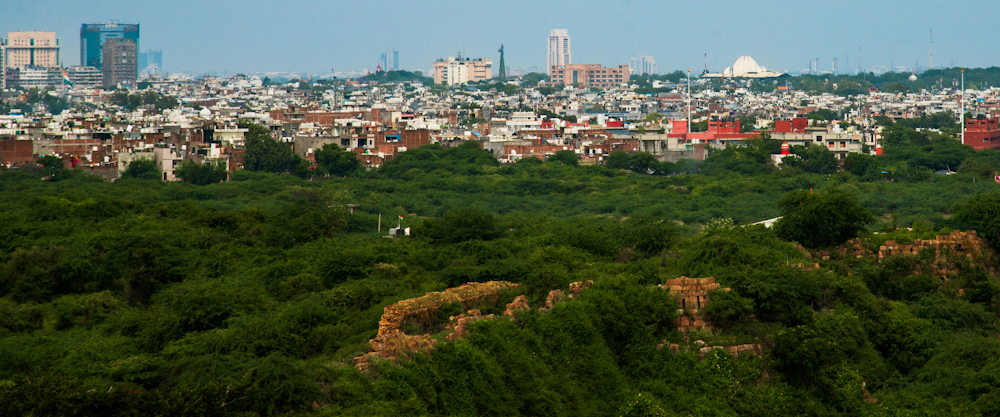
Your commute will be the biggest factor in finding accommodation in Delhi, since a cross-town drive of an hour or more is common at rush hour. Families also tend to choose an area close to their children’s school.
Families and diplomats tend to settle in leafy South and Central Delhi neighbourhoods such as Vasant Vihar, Shanti Niketan, Golf Links, and Defence Colony. Housing in these areas is mostly independent houses and ‘builder floors’, which are single-storey units in low-rise buildings. Rents here are among the highest in India.
Expats who work in Gurugram often choose a high-rise apartment in a gated complex on Golf Course Road or in one of the DLF Phases. These complexes usually have a pool, a gym, round-the-clock security, and backup generators. The trade-off is Gurugram’s patchy civic infrastructure, and flooded roads are a regular nuisance during the monsoon.
Real estate agents handle most expat lettings. Locals call them brokers, and they usually charge tenants a fee of about one month’s rent. Landlords tend to ask for a security deposit of a few months’ rent, and 11-month leases are the most common.
Renting Accommodation in Delhi
Best Places to Live in Delhi
Cost of living in Delhi
New arrivals from London or New York usually find the cost of living in Delhi low, but those on an international package often spend more than they expect. In Mercer’s annual Cost of Living City Ranking, Mumbai is the only Indian city that’s pricier for expats than Delhi.
Rent is the biggest expense, especially in the South Delhi neighbourhoods and Gurugram complexes that are popular with expats. International school fees aren’t far behind, so you should try to negotiate housing and education allowances into your contract.
Imported groceries, wine, electronics, and designer labels are pricey because of high import duties. Local produce, metro fares, auto-rickshaw rides, and meals at neighbourhood restaurants are cheap by comparison.
Some luxuries that are out of reach at home, such as a full-time driver or a cook, are affordable for many expats here. Set aside money for air purifiers and hefty electricity bills in May and June, when the air conditioning is on almost nonstop.
Living in Delhi with children
Delhiites tend to dote on toddlers, and families living in Delhi with children soon get used to strangers who stop to chat with their little ones. Restaurant staff are generally happy to see young diners, and many expat families employ a nanny or a housekeeper to help at home.
Air quality is the biggest worry for most parents, especially during the winter smog season. On the most polluted days, the authorities can move primary school classes to hybrid or online mode, and families keep outdoor play to a minimum. In the summer heat from April to June, parents tend to swap the park for indoor play centres and pools.
Lodhi Garden and Sunder Nursery are favourites for picnics when the weather is kind. For a rainy or smoggy day, the National Rail Museum, the National Science Centre, the National Museum, and the Nehru Planetarium are reliable standbys.
Private healthcare in Delhi is excellent, and hospitals such as Max, Fortis, Indraprastha Apollo, and Medanta have international-standard facilities. Public hospitals are crowded, so expat families rely on private care and an employer-sponsored international health insurance policy. Make sure you have outpatient cover, since most of a young family’s medical bills are for routine visits.
Healthcare and Medical Insurance in Delhi
Finding a school in Delhi
Finding a school in Delhi should be one of the first jobs on your list. The best-known international schools have long waiting lists, and some give priority to embassy families.
Most expat families choose an international school. The American Embassy School and the British School are long-standing favourites, both in Chanakyapuri. Gurugram-based families often look at the Pathways campuses there. The city also has French and German schools for those who want a home-country curriculum. Between them, these schools offer the International Baccalaureate (IB), the English National Curriculum, IGCSEs, and an American high school diploma.
Top Indian private schools such as Vasant Valley School have a strong academic reputation, but admission is fiercely competitive. Few expat families use public schools, which follow the national curriculum and often teach in Hindi.
School and Education for Expats in Delhi
International Schools in Delhi
Private Schools in Delhi
Getting around in Delhi
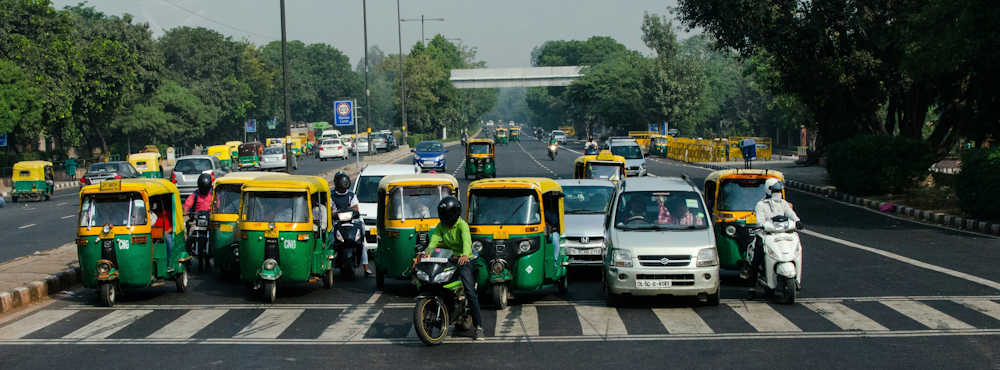
Most expats getting around in Delhi use the metro, ride-hailing apps, auto-rickshaws, or a car with a hired driver. The Delhi Metro is India’s largest and busiest network, with more than 240 miles (390km) of track and nearly 300 stations across Delhi, Gurugram, Noida, and other satellite cities. Delhi Transport Corporation (DTC) runs one of the largest electric bus fleets in India, and its small DEVi feeder buses are handy for the short trip between a metro station and home.
Uber and its local rivals are cheap and easy to use. Auto-rickshaws are fine for short hops, although you should agree the fare first or book one through an app.
Few expats drive themselves in Delhi. The traffic is heavy, and lane discipline is loose, so most people hire a driver or use a car and driver provided by their employer.
Indira Gandhi International Airport is the main airport for international flights. The newer Noida International Airport at Jewar is a handy alternative for residents of Noida and Greater Noida.
Public Transport, Driver’s Licences and Driving in Delhi
Climate and weather in Delhi
Long-term residents plan their year around the climate and weather in Delhi, and most find the winter smog harder to handle than the summer heat. The climate is officially humid subtropical, although conditions are more often semi-arid.
From April to June, temperatures above 104°F (40°C) are routine, and days above 113°F (45°C) are a regular feature of May and June. Locals call the hot, dusty westerly wind of early summer the loo, and afternoons outdoors are close to unbearable on loo days. Extreme heat is more common than it was a generation ago, and residents rely on air conditioning to get through the season.
The monsoon season is usually from late June or early July to September. Downpours are heavy but often brief, and the humidity is oppressive.
Winter, from December to February, is pleasant by day and chilly at night. Most homes have no central heating, so you’ll want portable heaters for January nights, when temperatures are sometimes as low as 41°F (5°C). Dense fog is common in December and January, and airlines and rail operators often delay or cancel services because of it.
Ultimately, living and working in Delhi has its pros and cons, and if you move here with an open mind, you are likely to enjoy it the most and end up staying the longest. Delhi offers the unique sights and smells of a quintessential Indian experience alongside the excitement and fast pace of a megacity.